Streamline Selling Insurance with InsureForce
Creating platform to help sales manage policy records, selling insurance to corporates and adding leads.
2024
UI
Desktop
Case Study
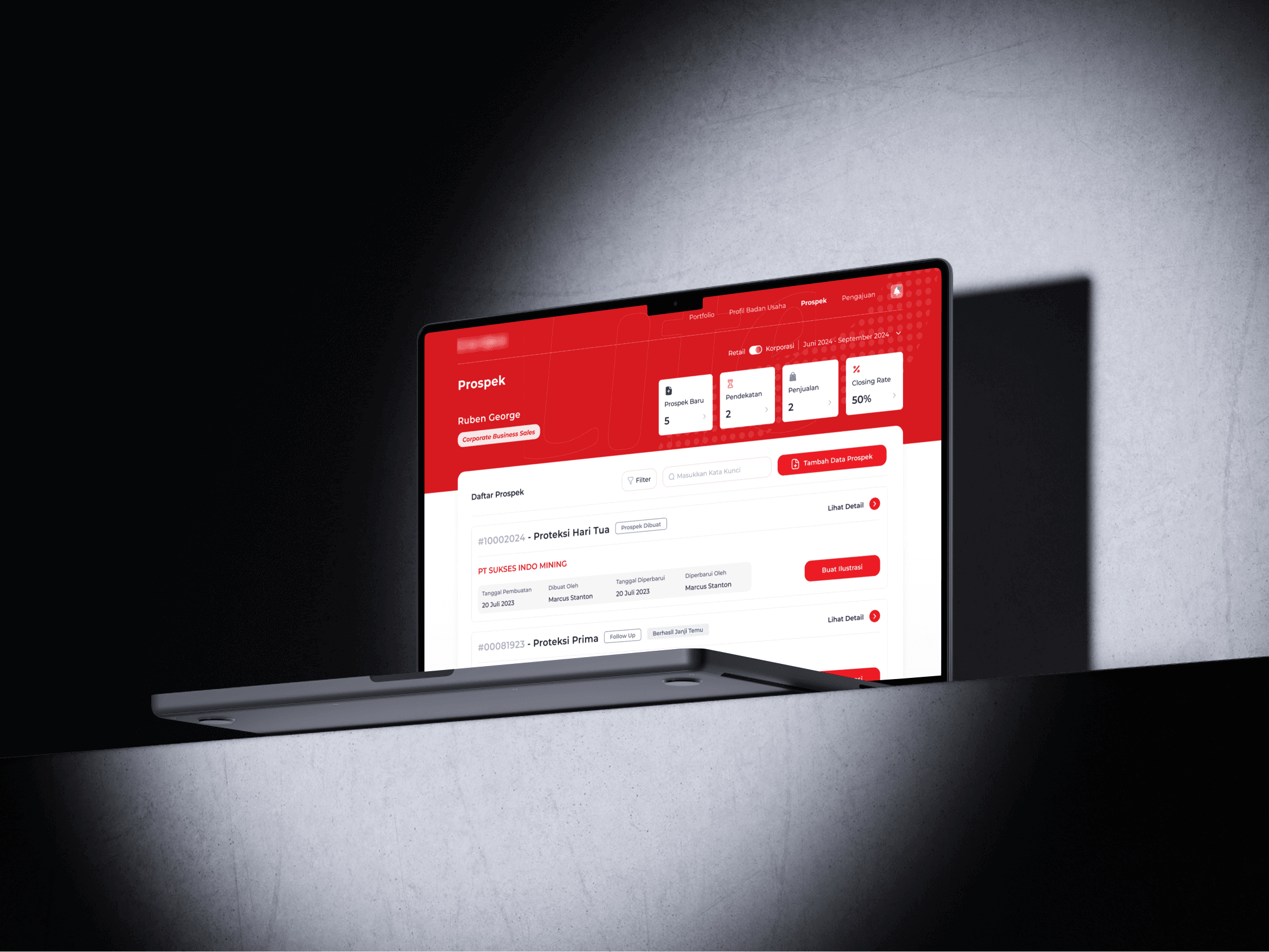
Overview
Company: A life insurance company that is one of a state-owned holding company engaged in non-bank financial services
Role: UI/UX Designer
Platform: Web/PWA
Timeline: July 2024
Note: For confidentiality, logos are blurred, application name and policy information has been pseudonymized.
Background
The company had a successful B2C insurance platform but identified a significant growth opportunity in corporate sales (B2B). The challenge: The existing platform wasn't built for corporate workflows. It couldn't handle:
Bulk employee coverage
Long sales cycles with multiple stakeholders
Complex proposal processes for business clients
Brief:
Design InsureForce to enable sales teams (IBS/CBS marketers) to manage corporate relationships, track opportunities, and close deals with business clients.
Design Constraints
Three key factors shaped my approach:
Existing Design System
The Admin Portal (internal tool) already had established UI patterns. Maintaining familiar UI patterns would reduce the learning curve and speed adoption. Reusing components would also accelerate development and ensure consistency in cross-platform.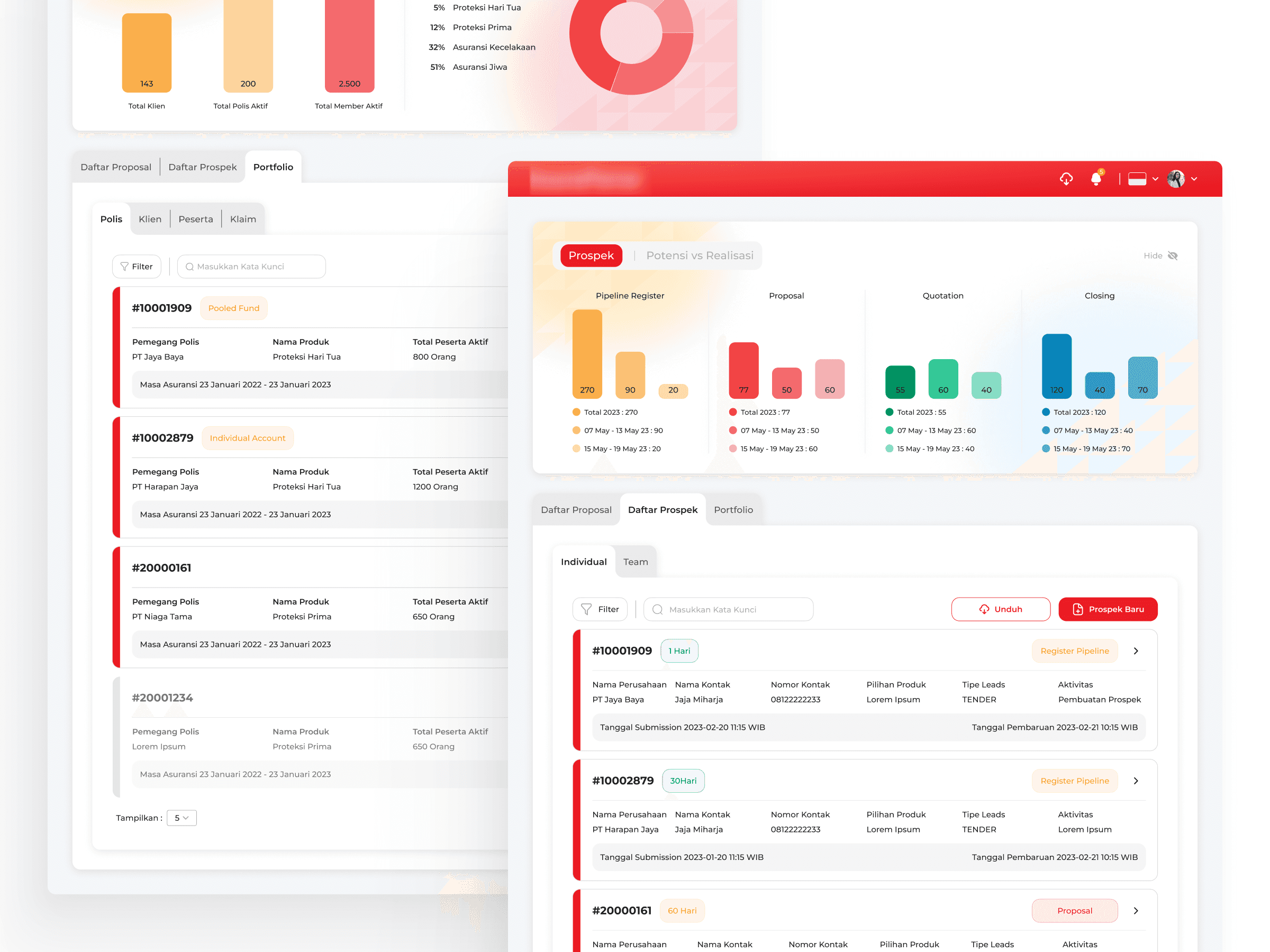
Stakeholder-Led Validation
I worked closely with the Product Owner who gathered feedback from upper management (domain experts in corporate insurance). Due to project constraints, validation happened through stakeholder reviews rather than end-user testing.Wireframe exploration
I started with wireframes to establish structure and gain stakeholder alignment before detailed design work.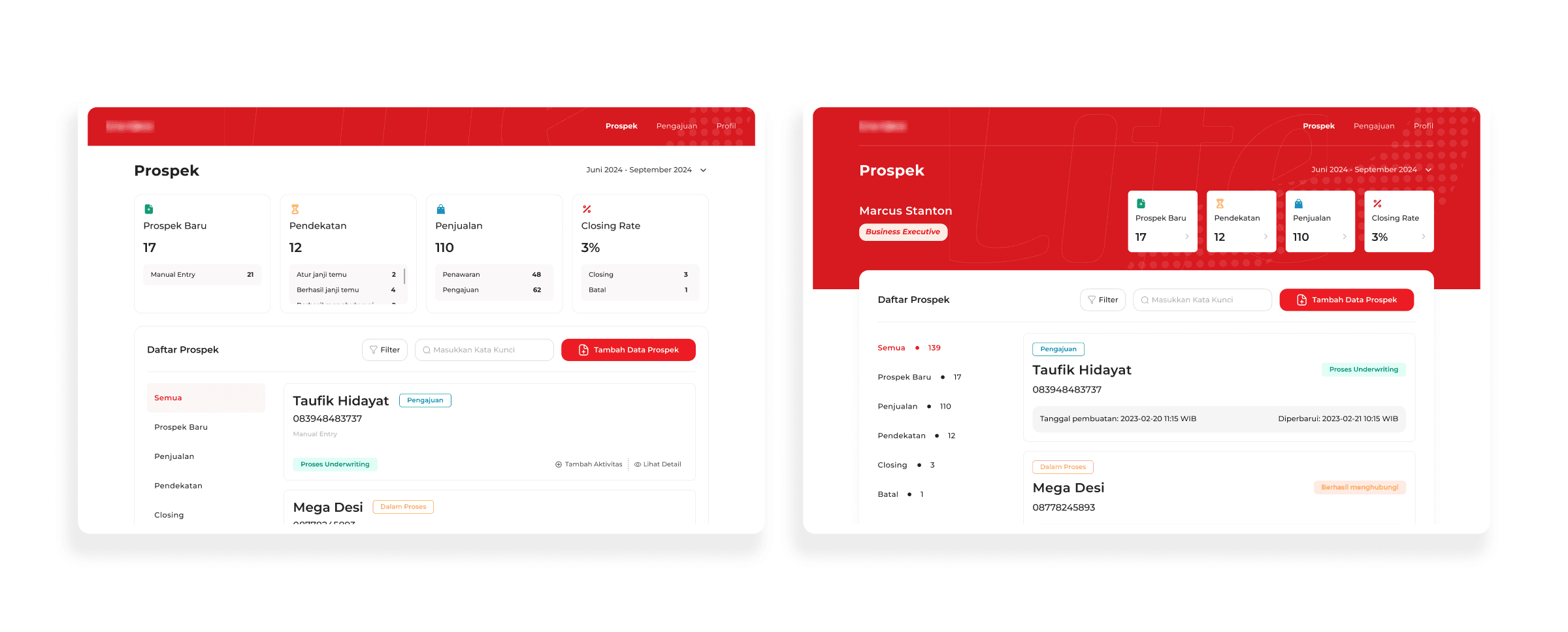
Features
Prospect
Corporate insurance sales can take 6-12 months from first contact to closing. Without a system to track these long-cycle opportunities, sales reps had no way to manage multiple corporate prospects systematically. Management also had zero visibility into the corporate workflow.
I designed a structured workflow based on how our sales team naturally conceptualize their corporate sales process: Prospek Baru (New Prospects) for initial leads requiring qualification; Pendekatan (Approach): Actively engaging with client's PIC; and Penjualan (Submission) which are submitted proposals waiting for decision.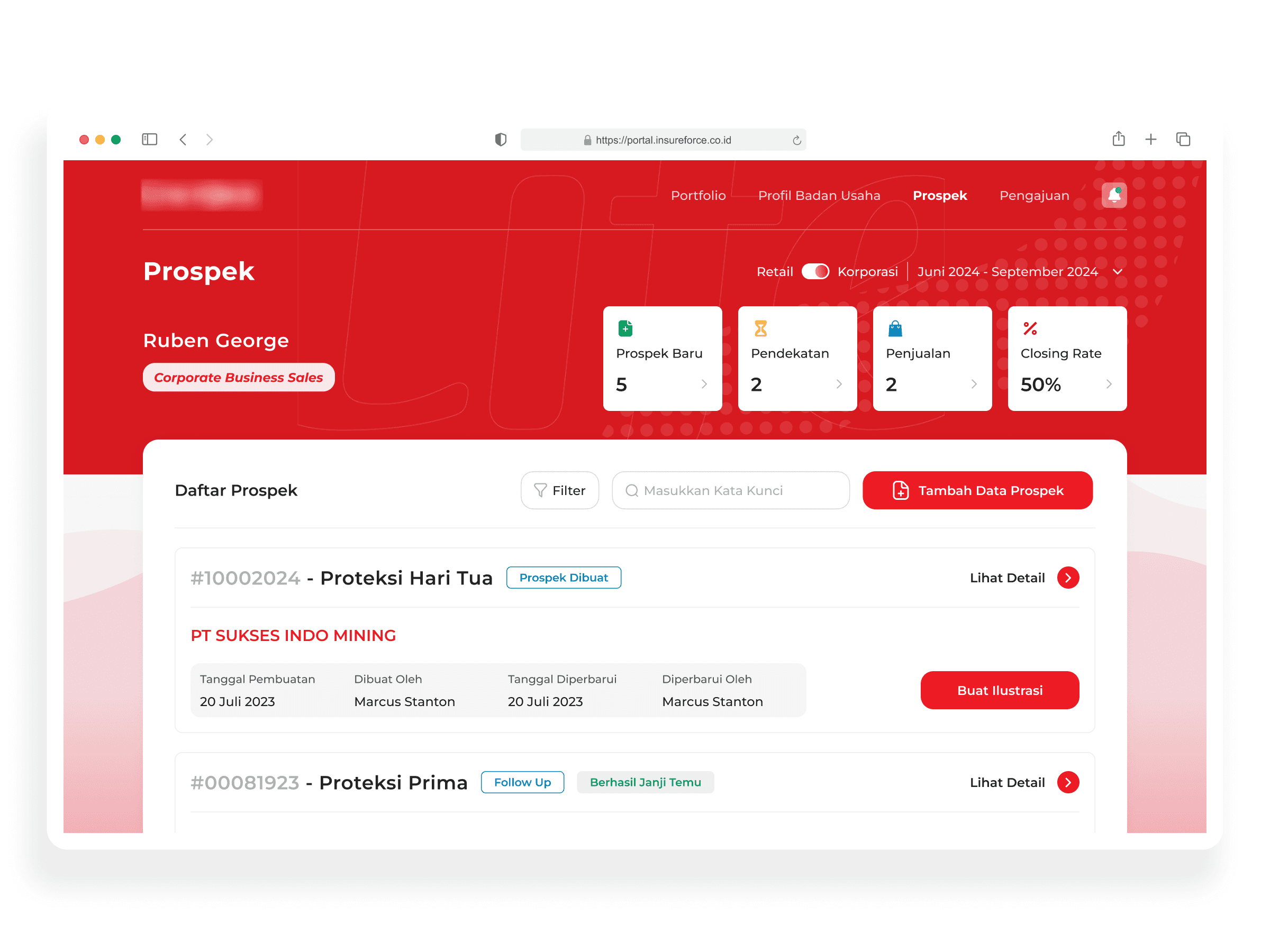
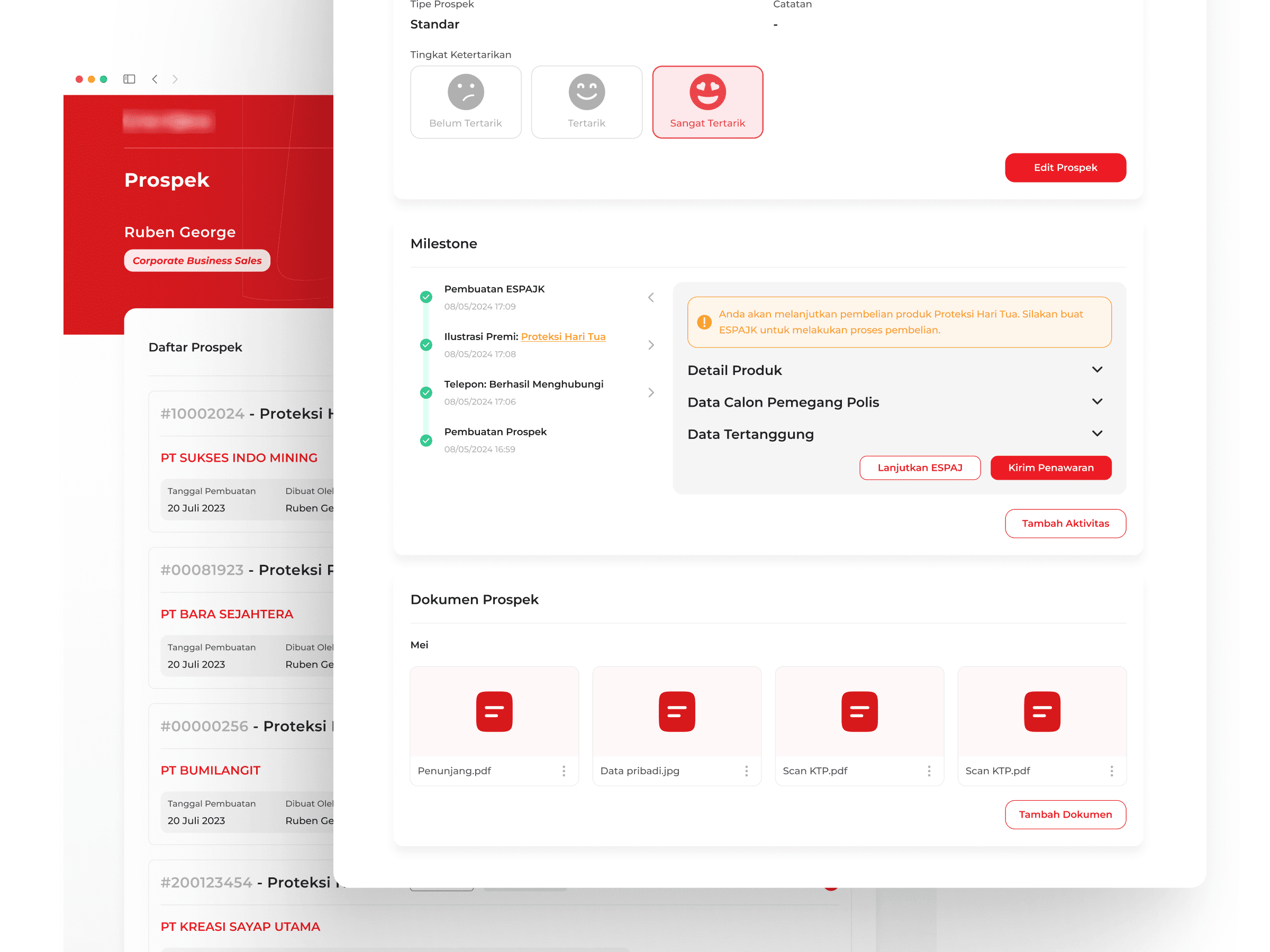
Sales team now can track their selling progress. Managers can spot bottlenecks in real time and the structured process ensures no high-value prospect falls through the cracks.
Create Illustration
Creating insurance premium calculations for corporate clients (covering potentially hundreds of employees) is complex. Sales reps need to present accurate calculation during client meetings, which would take time (and prone to error) if it was done manually.
To approach this, I created a form that will include Premi Calculation so that sales can see different variables affect pricing while they input the data.
Sales can now calculate illustration in real-time during client meetings by taking into account all existing aspects.Business Entity Profiles
Information about corporate clients was scattered across multiple systems or existed only in individual rep's notes. Sales reps need to track not just the current opportunity, but the complete history with each corporate client—past proposals, key contacts, contract renewals, etc.
I created Business Entity Profiles that serves as the hub for all information regarding client's company detail, contact directory, history of interactions and proposals, active policies and renewal dates.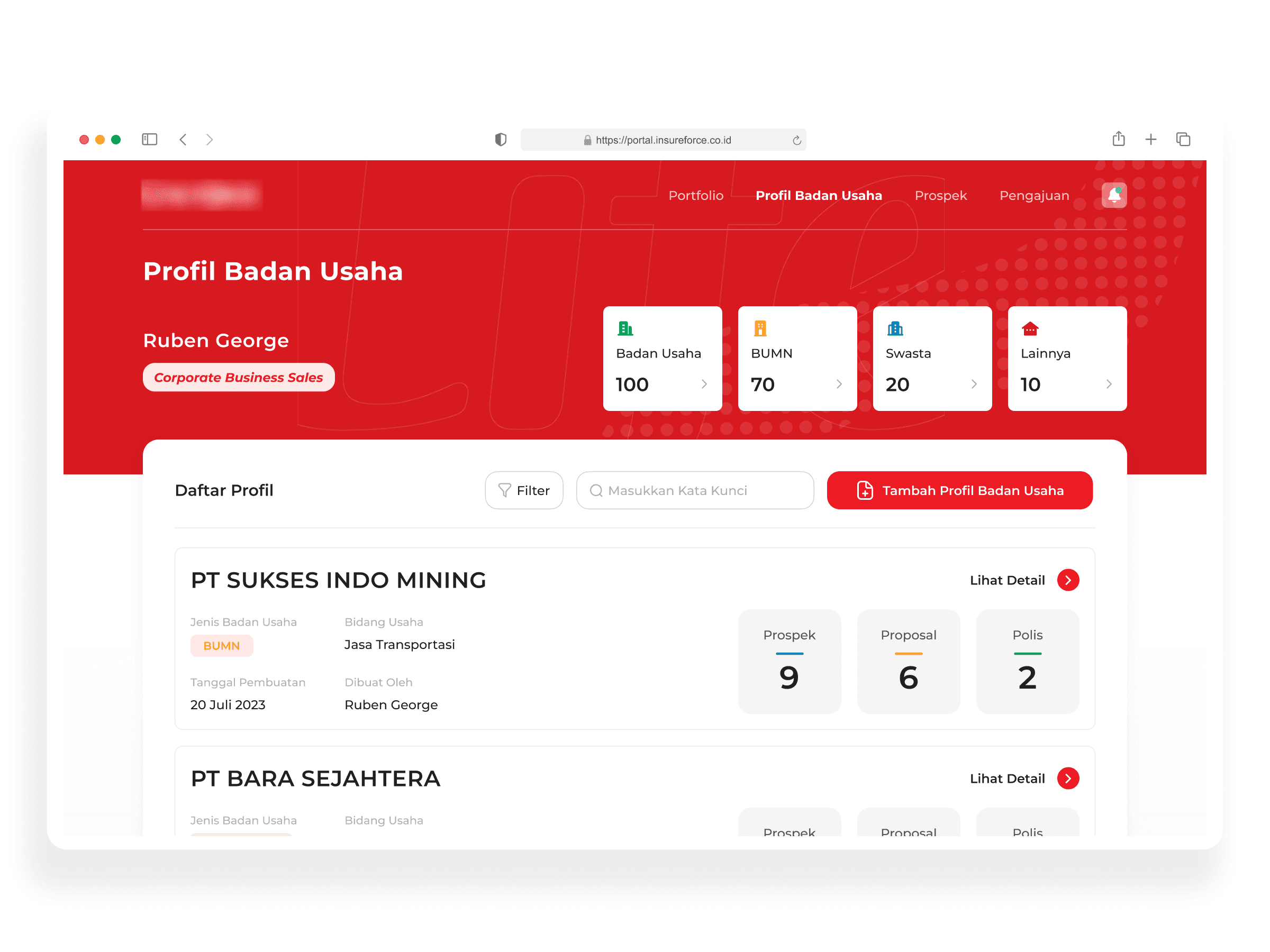
Design Approach
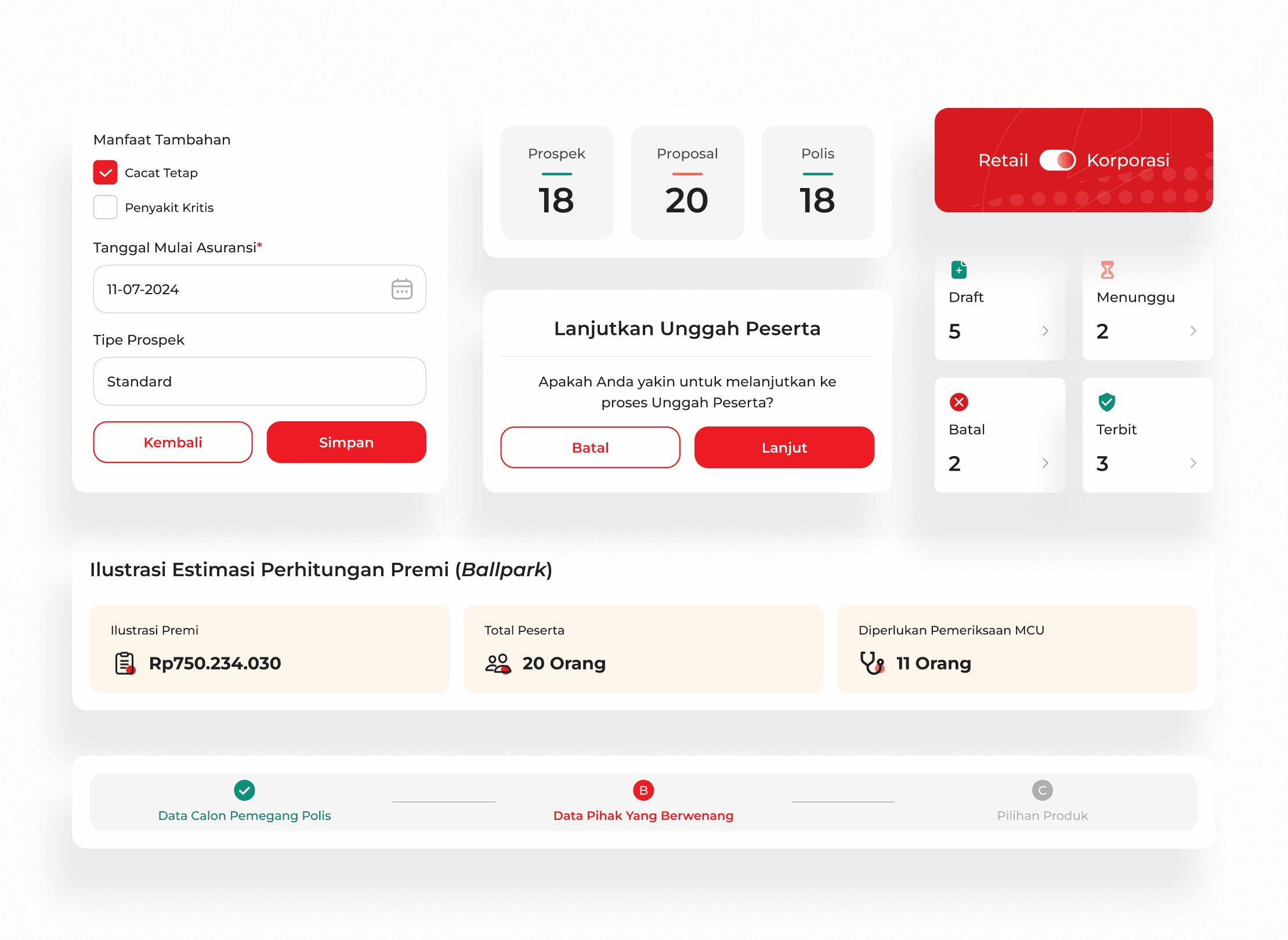
Since the application design process didn’t start entirely from scratch, I utilized existing design components that had already been created. This ensured a cohesive and intuitive experience for users, as the familiar components were seamlessly integrated into the application. I was also able to simplify the handoff process for developers, ensuring smoother implementation and reducing development time.
Reflection
What Worked
Building on familiar UI patterns positioned InsureForce for faster adoption. Regular stakeholder feedback kept designs aligned with corporate insurance realities.
What I'd Do Differently
The stakeholder-driven approach made sense for this timeline, but actual sales reps likely have frontline insights that upper management doesn't see. Given more time, I'd conduct brief interviews during the wireframe phase to catch usability issues before development.
Key Learning
B2B tools require balancing expert stakeholder knowledge with end-user workflow realities, with both perspectives are critical for creating tools that work in practice, not just in theory.
Closing
InsureForce was created with the aim of facilitating marketers and sales teams in selling insurance products to corporates through accessible platform. By structuring workflows around how sales actually work (not just how systems think), the design bridges the gap between B2C simplicity and B2B complexity.
While full deployment metrics aren't yet available, stakeholder validation confirmed the core workflows align with real corporate sales processes. Most importantly, the design establishes a scalable foundation for future B2B insurance products.
🍀